Advantages of Chemical Peel: What Dermatologists Want You to Know Before Your First Treatment
What Is a Chemical Peel and How Does It Work
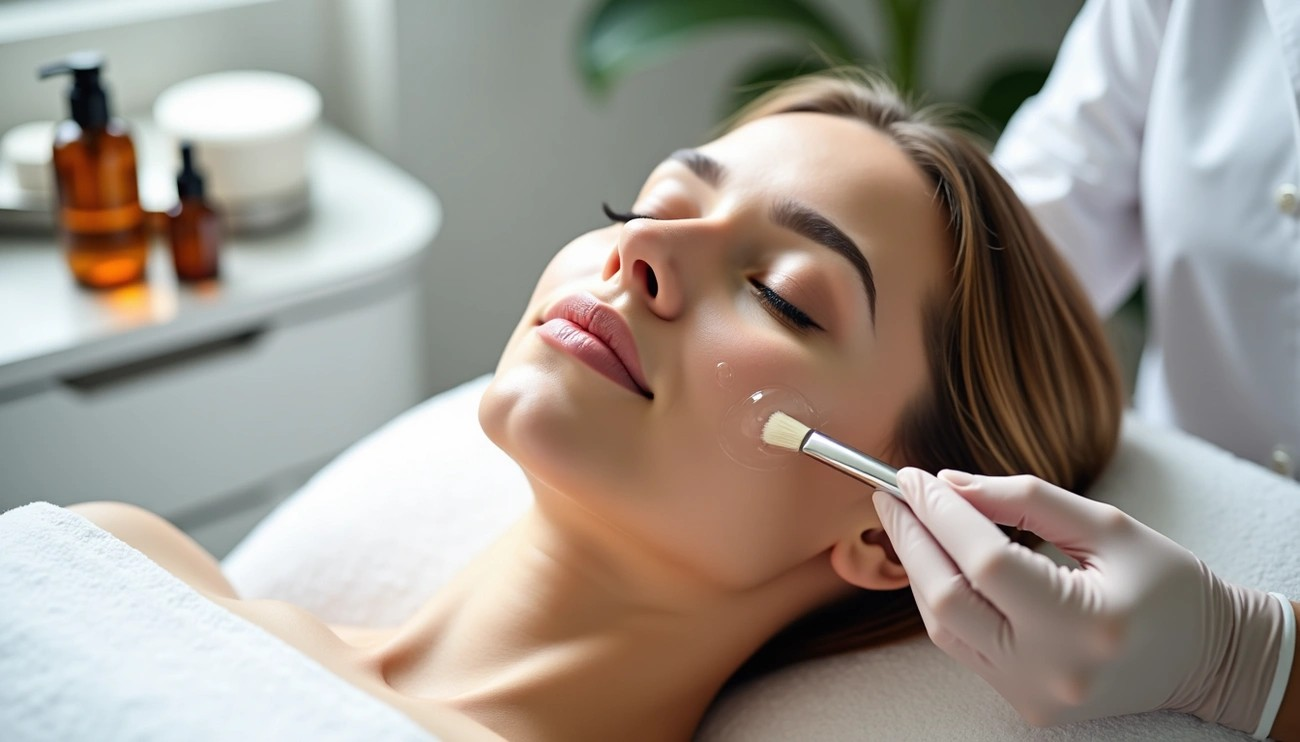
The Chemical Peeling Procedure Explained A chemical peel is a cosmetic procedure that involves applying a chemical solution to your skin, which causes controlled damage to skin layers [1]. Your face will be really cleansed with an agent that removes excess oils, while your eyes and hair are protected [1]. The chemical solution is then applied using a brush, cotton ball, gauze, or sponge [1]. Chemical solutions include glycolic acid, trichloroacetic acid, salicylic acid, lactic acid, or carbolic acid (phenol) [1]. Your dermatologist applies the chemical solution or rubs it more vigorously onto the skin, avoiding your brows, eyes, and lips [2]. You may experience a slight tingling with light to medium peels or a burning sensation with deep peels at the time of application [2].
How Chemical Peels Improve Your Skin
A chemical solution applied to your skin breaks down the bonds between skin cells [3]. This controlled injury causes the top layer of skin to peel away and reveals smoother skin underneath [3]. New, healthier skin cells grow in its place as your skin heals [3]. The chemical peeling procedure works by causing controlled epidermal damage with or without affecting the dermis [4]. This controlled damage prompts skin regeneration and remodeling, which improves skin appearance and texture [4]. Chemical peels stimulate the production of collagen and elastin. This leads to the thickening of your skin's outermost layer and an increase in volume and suppleness [1].
Different Types of Chemical Peels Available
Chemical peels are classified based on their depth of skin penetration [1]: Light (superficial) peels remove the outer layer of skin (epidermis) using alpha-hydroxy acids or beta-hydroxy acids [1]. Recovery may be within hours to a few days with little to no downtime [1]. You might need a light peel every two to five weeks [1]. Medium peels remove skin cells from the epidermis and upper part of your middle skin layer (dermis) using trichloroacetic acid or glycolic acid [1]. Recovery may take a week or more and require some downtime [1]. Deep peels penetrate down to the lower middle layer of your skin using phenol [1]. Recovery time is longer and requires pretreatment for up to eight weeks [1]. A deep chemical peel is a one-time only treatment if applied to your face [1].
Key Chemical Peel Benefits for Your Skin
Chemical peels soften fine lines around your mouth and eyes. They remove the outer skin layer and stimulate collagen production [5]. Your skin becomes firmer and bouncier as your body produces more collagen. Light peels address surface lines. Medium and deep peels target deeper wrinkles [5]. Regular light peels can make your skin look smoother and younger.
Treats Acne and Minimizes Acne Scars
Salicylic acid, glycolic acid and trichloroacetic acid are peeling agents used to treat acne and acne scars [6]. Glycolic acid reduces bacteria that cause acne and corrects abnormal skin cell buildup in pores [6]. TCA at concentrations of 35 to 100% works well to treat acne scars [6]. Lower concentrations treat atrophic boxcar scars or rolling scars. The CROSS method using 100% TCA addresses ice pick scars that resist other treatments [6]. The new collagen produced during healing helps fill in scarred areas and smooth them out.
Fades Dark Spots and Evens Skin Tone
Chemical peels break down excess melanin in pigmented areas. They remove damaged skin cells [7]. Glycolic and lactic acids stimulate skin cell turnover. New cells replace old, pigmented ones and speed up the fading process [7]. Salicylic acid provides an anti-inflammatory effect that decreases post-inflammatory pigmentation [8]. Medium peels penetrate deeper layers to promote uniform pigmentation. This results in most important improvements in skin clarity and brightness [9].
Removes Sun Damage and Age Spots
Peels eliminate age spots. They exfoliate the outermost layer where these spots are located [10]. This exfoliation breaks down excess melanin in affected areas and reduces their appearance over time [10]. Glycolic and trichloroacetic acid remove sunspots and wrinkles [11]. Medium peels using trichloroacetic or glycolic acid reduce age spots and sunspots [12]. Improves Overall Skin Texture and Brightness Dead skin cells are removed through exfoliation. This promotes cell turnover and reveals smoother, more refined skin [9]. You'll notice brighter and more radiant skin within days [7]. Chemical peels also improve pore appearance. They boost absorption of skincare products applied afterward [13].
What Dermatologists Want You to Know Before Your First Treatment
Are You a Good Candidate for Chemical Peels Patients with fair skin and light hair see better results from chemical peels [1]. But darker skin tones can also benefit depending on the concern being treated, though you face a higher risk of uneven skin tone afterward [1]. Superficial peels work on nearly all skin types, while darker skin tones require caution with deeper peels to avoid pigment damage [14]. You're an ideal candidate if you're in good health, have realistic expectations, and commit to following post-treatment care instructions [14]. Chemical peels won't address skin sags, bulges or severe wrinkles [1].
Medical History and Skin Conditions to Discuss
Your dermatologist needs your complete medical history before proceeding. Patients who used isotretinoin (Accutane) within the past six months cannot undergo certain peels [15]. Inform your provider if you have a history of keloid scarring, frequent cold sores, autoimmune disease, or are pregnant or breastfeeding [15][16]. Your dermatologist may prescribe preventive antiviral medication to avoid breakouts during healing if you have a history of herpes simplex outbreaks [17].
Pre-Treatment Skin Preparation Requirements
Start preparing your skin at least two weeks before your peel [5]. Use professional acid-based cleansers twice daily to thin the outer skin layer and follow with antioxidant serums and SPF 40 sunscreen [5]. Medium-depth peels like TCA may need retinoids and melanin inhibitors 2-4 weeks beforehand, especially when you have darker skin or hyperpigmentation [5][18]. Stop using retinoids, AHAs, BHAs, benzoyl peroxide and exfoliating products 3-5 days before treatment [5][19]. Avoid waxing, hair removal and direct sun exposure for at least one week prior [16][20].
Understanding the Different Peel Depths
AHA peels provide gentle brightening with minimal downtime. TCA options target more visible concerns with longer recovery [17]. Deep peels require pretreatment for up to eight weeks [15].
Setting Realistic Expectations for Results
Superficial peels require 3-5 treatments to achieve desired results, repeated every two to five weeks [6]. Plan for maintenance treatments every 6-8 weeks to sustain benefits [5].
What to Expect During and After Your Chemical Peel Treatment
The Treatment Process Step by Step Your dermatologist begins by cleansing your face to remove oils and makeup. Eyes and hair receive protection through ointment, gauze, tape or goggles. The chemical solution is applied using a brush, cotton ball or sponge. You might feel mild stinging with light peels during application. Medium peels can cause burning sensations that last up to 20 minutes. The peel is neutralized or removed after the desired exfoliation occurs. Cool compresses and soothing serums follow.
Recovery Time and Healing for Each Peel Type
Light peels heal within 1-7 days with mild redness and scaling. Medium peels take 7-14 days. Swelling worsens for 48 hours before skin crusts and peels off. Deep peels just need 14-21 days of healing. You'll need bandages and home recuperation for 2-3 weeks.
Post-Treatment Care and Sun Protection
Cleanse with cool water using only fingertips. Apply recommended moisturizers daily to prevent dryness and scarring. Use physical sunscreen with SPF 30+ that has zinc oxide and titanium dioxide. Avoid sun exposure for 7-10 days minimum. This extends to 3-6 months after deep peels. Skip strenuous exercise, hot water, saunas and sweating for 2-3 days.
Results Timeline
You'll notice smoother texture, brighter tone and a more even complexion within one week.
Side Effects and How to Manage Them
Common side effects include redness, swelling, stinging and peeling. Apply ice packs for 20 minutes to reduce discomfort. Use topical hydrocortisone for inflammation. Contact your dermatologist if you experience severe swelling, pus, fever or worsening pain.
Conclusion
Chemical peels are a proven solution that addresses multiple skin concerns, from fine lines to sun damage. Successful results depend on choosing the right peel depth for your skin type and care before and after treatment. Consult with a qualified dermatologist to determine if you're a good candidate. They will develop a treatment plan tailored to your specific needs. You'll achieve smoother, brighter, more youthful-looking skin with realistic expectations and guidance.
FAQs
Q1. Do dermatologists recommend chemical peels as a safe treatment option? Yes, dermatologists have been safely performing chemical peels for over 50 years with an excellent safety record. People with all skin types, including darker skin tones, can safely receive chemical peels when treated by a dermatologist with appropriate expertise. Q2. Can older adults in their 60s benefit from chemical peel treatments? Age is not a limiting factor for chemical peels. In fact, deeper chemical peels are often more suitable for older adults as they're specifically designed to address more advanced signs of aging like deeper wrinkles and significant sun damage. Q3. Should I stop using retinoid products before getting a chemical peel? Yes, you should discontinue retinoid products like tretinoin 7-10 days before your chemical peel treatment. However, other preparatory products like hydroquinone can typically be continued up until the treatment and resumed afterward to enhance results and reduce the risk of pigmentation issues. Q4. How long does it take to see results after a chemical peel? You can expect to see noticeable improvements within one week after treatment, including smoother skin texture, brighter tone, and a more even complexion. However, superficial peels typically require 3-5 treatments spaced every two to five weeks to achieve optimal results. Q5. What are the most common side effects of chemical peels and how are they managed? Common side effects include redness, swelling, stinging, and peeling skin. These can be managed by applying ice packs for 20 minutes to reduce discomfort and using topical hydrocortisone for inflammation. Contact your dermatologist if you experience severe symptoms like excessive swelling, pus, fever, or worsening pain.
References
[1] - https://www.webmd.com/beauty/cosmetic-procedures-chemical-peel-treatments [2] - https://www.theaestheticsociety.org/procedures/skin-hair/chemical-peel/detailed-procedure-information [3] - https://evolvemedspa.com/blog/chemical-peels-explained-how-do-they-work/ [4] - https://www.ncbi.nlm.nih.gov/books/NBK547752/ [5] - https://www.premierdermatologypartners.com/how-to-get-ready-for-a-chemical-peel/ [6] - https://my.clevelandclinic.org/health/treatments/11010-chemical-peels [7] - https://www.drdennisgross.com/use-a-chemical-peel-for-hyperpigmentation-and-dark-spots.html?srsltid=AfmBOor-vC570Qwp2GZKaEKX3p29CSCb-vko5W3axzZsR1HI4RzCkbP- [8] - https://pmc.ncbi.nlm.nih.gov/articles/PMC3560164/ [9] - https://www.johnvinemd.com/chemical-peels-a-simple-solution-for-complex-skin-concerns/ [10] - https://www.laskyskincenter.com/do-chemical-peels-help-with-age-spots/ [11] - https://www.asds.net/skin-experts/skin-treatments/chemical-peels/chemical-peels-for-sun-damaged-skin [12] - https://www.keysdermatology.com/can-chemical-peels-help-with-sun-damaged-skin/ [13] - https://www.dermatologyassociatesnj.com/blog/instant-skin-rejuvenation-7-incredible-benefits-of-a-chemical-peel [14] - https://www.eternaldermatology.com/who-is-a-good-candidate-for-a-chemical-peel/ [15] - https://www.mayoclinic.org/tests-procedures/chemical-peel/about/pac-20393473 [16] - https://www.unionderm.com/chemical-peel-faq/ [17] - https://www.parksdermatology.com/blog/1434553-preparing-for-a-chemical-peel-pre-treatment-guidelines-for-patients/ [18] - https://nextstepsinderm.com/derm-topics/superficial-medium-depth-chemical-peels/ [19] - https://www.dulyhealthandcare.com/health-topic/how-to-prepare-for-a-chemical-peel [20] -https://hudgensmd.com/chemical-peel-pre-care-treatment-instructions/